
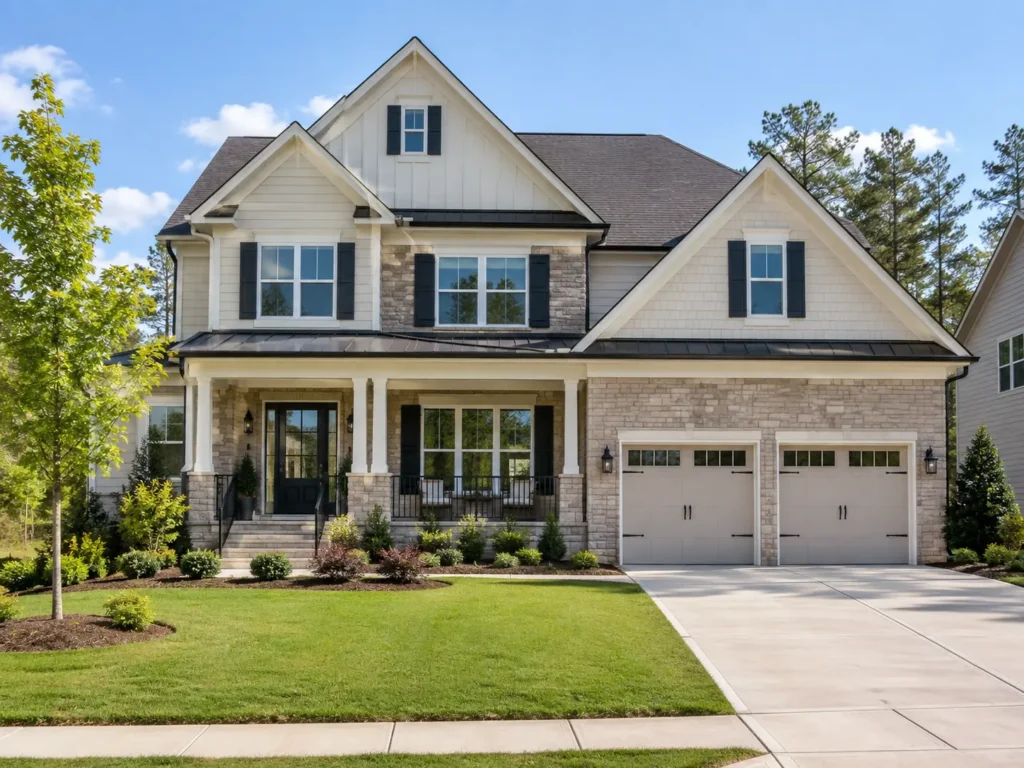
If you already own a home but are ready for something different, one of the hardest questions is often not what to buy.
It is which transaction should happen first.
Should you sell your current house before buying the next one?
Should you buy first and hope the existing home sells quickly?
Can you coordinate both closings?
What happens if you find the perfect house before yours is under contract?
There is no single answer that works for everyone.
When I help clients sell a home while also buying another, I start with their finances, timing, risk tolerance, housing needs, and flexibility.
Here are the major options.
Option 1: Sell Your Current Home First
Selling first can provide a lot of financial clarity.
Once your current home closes, you know approximately how much money you have available for the next purchase.
That can make it easier to determine:
- Your down payment
- Your comfortable purchase range
- How much equity is available
- Whether you need financing
- What monthly payment makes sense
- How aggressively you can pursue the next home
It also removes the uncertainty of owning two homes at once.
The obvious disadvantage is housing.
If your home sells before you find the next one, where are you going to live?
Possible solutions can include temporary housing, staying with family, a short-term rental, or other arrangements depending on your circumstances.
Some people are comfortable with that.
Others would find it extremely disruptive.
Option 2: Buy the Next Home First
Buying before selling can make the physical move easier.
You get the keys to the next house, move on your own schedule, and then prepare the old house for sale without living through showings.
That can be appealing.
However, the financial side needs careful thought.
You may temporarily have:
- Two mortgage payments
- Two sets of utilities
- Two insurance obligations
- Two homes requiring maintenance
- Less certainty about how much equity will come from the sale
The longer your existing home remains on the market, the more important that carrying cost becomes.
Buying first can work well for the right household, but I would want you to understand the financial exposure before you commit to it.
Option 3: Coordinate the Sale and Purchase
Many homeowners try to make the transactions happen relatively close together.
In the ideal version, your existing home is under contract, you find your next property, and the two transactions move toward closing on coordinated timelines.
That can reduce the amount of temporary housing or double ownership required.
But coordinating two transactions also creates more moving parts.
Now we are tracking:
- Your buyer
- Your buyer’s financing
- Your sale’s due diligence
- Your purchase
- Your financing
- Inspections
- Repairs
- Appraisal issues where applicable
- Closing dates
- Movers
- Possession timing
A delay in one transaction can affect the other.
This is why communication and planning matter so much.
What About Making an Offer Contingent on Selling My House?
Depending on the circumstances, a buyer may want an offer structured around the sale of an existing property.
Whether that is realistic depends heavily on the specific property and negotiating environment.
If a seller has several strong offers from buyers who do not need to sell another property first, a more complicated offer may be less attractive.
If a home has been sitting on the market and the seller has more flexibility, the conversation may be different.
I do not like universal rules such as:
“You should never make a contingent offer.”
or
“Sellers always accept them.”
Real estate is property-specific.
We need to look at the leverage on both sides of the transaction.
How Much Equity Do You Need From Your Current Home?
This is one of the biggest questions.
Some homeowners need the proceeds from their current home in order to make the next purchase.
Others have enough available funds or financing flexibility to buy before selling.
Before making a strategy, I want to understand:
How dependent is Purchase B on the money coming from Sale A?
If the answer is “completely dependent,” then selling first or coordinating transactions may deserve serious consideration.
If you have substantial flexibility, your options may be broader.
Do Not Let Timing Force You Into the Wrong Home
This is one of the biggest mistakes I want clients to avoid.
Imagine your existing home goes under contract quickly.
Suddenly you feel like the clock is ticking.
You tour several homes, do not love any of them, and start thinking:
“We have to choose something.”
You do not necessarily have to.
One of the things my clients have appreciated is that I am willing to keep looking until the right fit comes along rather than creating unnecessary pressure.
One buyer I worked with searched for approximately a year before finding the right home. Other clients have paused their search and come back later.
You can read more about the way I work with real clients on my client success stories page.
A housing deadline should be managed strategically. It should not become a reason to make a bad long-term purchase.
What If Your Current Home Sells Faster Than Expected?
That is a good problem to have—until you realize you still need somewhere to live.
Before listing, we should discuss that possibility.
Questions I would want you to consider include:
- Where could you stay temporarily?
- Could you put belongings in storage?
- How flexible is your work situation?
- Do you have children or pets that make temporary housing harder?
- Are you willing to rent?
- How quickly could you realistically find the next home?
- How specific are your requirements?
Someone who would happily choose among 30 suitable homes has a very different situation than someone waiting for a particular floor plan in one neighborhood.
What If Your Current Home Takes Longer to Sell?
This is the opposite risk.
You buy the next home expecting the old one to sell immediately.
Then several weeks pass.
This is why pricing and market positioning matter.
Current market conditions should be evaluated before you build your entire purchase strategy around an assumption that your house will sell in three days.
Some homes do.
Others take longer.
Your plan should survive a less-than-perfect scenario.
Think About More Than the Purchase Price
When coordinating a move, I encourage clients to think about the whole financial picture.
That includes:
- Mortgage payoff
- Expected proceeds
- Down payment
- Closing expenses
- Moving costs
- Temporary housing
- Repairs
- Potential overlap between homes
- New furniture or improvements
- Emergency reserves
You do not want to become “house rich and cash poor” simply because the transactions technically work on paper.
Why One Agent for Both Transactions Can Help
When appropriate geographically, having one agent understand both sides of your move can simplify coordination.
If I know exactly what needs to happen with your sale and exactly what is happening with your purchase, I can help you think through the timing as one strategy rather than two unrelated transactions.
That does not eliminate every possibility of delay.
But it does create clearer communication.
My goal is for you to understand what is happening, what could affect the timeline, and what decisions are coming next.
Start With the Sale Before You Start Shopping
Even if you ultimately decide to buy first, I recommend understanding your existing home’s likely market position early.
You do not necessarily need to list it tomorrow.
But you should know:
- What it may sell for
- What it may cost to sell
- What preparation it may need
- How long you can comfortably carry both homes
- What proceeds you are likely to have available
That information can change your entire buying plan.
If your current property is in Wake Forest, start by reviewing my Wake Forest real estate guide.
The Right Order Depends on Your Life, Not a Generic Rule
There are advantages to selling first.
There are advantages to buying first.
And there are ways to coordinate both.
The right choice depends on your finances, housing options, timeline, and tolerance for uncertainty.
My job is not to tell every homeowner to follow the same formula.
It is to help you understand the tradeoffs and build a plan around your actual situation.
If you are trying to coordinate a sale and purchase in Wake Forest or a nearby community, contact me and we can map out both sides before you make the first move.