
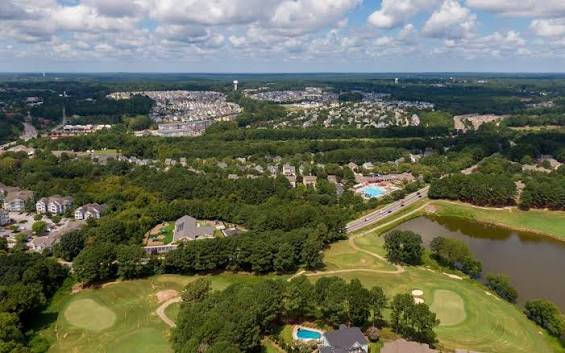
One reason buyers expand their home search into Youngsville is the possibility of finding more space.
Maybe you are tired of looking into your neighbor’s backyard.
Maybe you want room for a garden, detached garage, workshop, pets, outdoor living area, or simply more privacy.
You begin browsing properties and suddenly the question becomes:
Should I buy half an acre? One acre? Two acres? Five?
More land can be great.
It can also create more work, more expense, and more property than you actually need.
When I help buyers evaluate homes in Youngsville, I encourage them to focus less on the acreage number and more on what they actually want the land to do for them.
Here is what I mean.
Start With Why You Want More Land
Before deciding you need two acres, ask yourself why.
Are you looking for:
- More privacy?
- A larger backyard?
- Space between houses?
- Room for children or pets?
- A garden?
- A detached workshop?
- Boat or RV storage?
- Space for an accessory structure?
- Fewer neighborhood restrictions?
- Trees and natural surroundings?
- A quieter setting?
Those goals require very different properties.
If your real goal is simply more separation from neighboring houses, a well-designed half-acre lot may give you everything you want.
If you want a detached building or specific recreational use, the lot itself becomes much more important.
Usable Land Matters More Than Total Acreage
This is one of the most important concepts when buying acreage.
A listing may say the property has two acres.
That does not necessarily mean you have two acres of flat, open lawn.
Some of the land may be:
- Heavily wooded
- Steep
- Wet
- Within drainage areas
- Difficult to access
- Occupied by septic components
- Limited by easements
- Positioned in a way that makes it difficult to use
Meanwhile, another property on one acre may have a large, flat backyard that works perfectly for your plans.
Do not buy the number.
Buy the land itself.
Walk the Property
Photos rarely tell the whole story.
If acreage matters to you, I want you to physically understand the lot.
Walk it when practical.
Look at:
- Where the property appears to extend
- Elevation changes
- Drainage patterns
- Tree coverage
- Neighboring properties
- Road exposure
- Backyard shape
- Existing structures
- Fences
- Utility areas
- Driveway access
If precise boundaries matter for what you intend to do, appropriate surveys and professional information become important.
Do not assume a fence line, tree line, or mowed area is necessarily the legal property boundary.
Think About Maintenance Before You Fall in Love With the Space
A large yard looks wonderful in listing photos.
Then summer arrives.
Grass needs mowing.
Leaves fall.
Branches come down.
Landscaping grows.
Driveways need maintenance.
Trees may eventually need professional care.
If you are moving from a small suburban lot, consider whether you actually want the maintenance that comes with more land.
You may love doing yard work.
You may own equipment already.
You may plan to hire someone.
All of those are perfectly fine.
The important thing is making the decision intentionally.
More Land Can Mean More Privacy—but Not Always
A two-acre property does not automatically feel private.
Imagine a long, narrow lot with the house close to the road and another home nearby.
Now compare that with a smaller wooded homesite positioned well away from neighboring houses.
The smaller property may actually feel more private.
Look at:
- House placement
- Neighbor placement
- Tree buffers
- Road traffic
- Rear property use
- Future nearby development
Privacy depends on the configuration of the property, not simply acreage.
What Utilities Serve the Property?
As you move into properties with larger lots or more rural characteristics, do not assume every home has the same utility setup as a dense subdivision.
Depending on the specific property, you may encounter differences involving:
- Public water
- Wells
- Public sewer
- Septic systems
- Propane
- Internet availability
- Trash service
This does not make a property worse.
Thousands of homeowners are perfectly comfortable with systems such as wells and septic.
But you should know what serves the property before buying it.
If a home uses septic, for example, understand the system and how the site relates to it.
If reliable high-speed internet is essential because you work remotely, verify service for the actual address rather than assuming coverage.
Septic Can Affect How You Use a Lot
This is particularly important for buyers dreaming about adding structures or changing the property.
A lot may look as though it has plenty of open space.
But if a septic system and associated areas occupy part of the property, your future plans may need to account for them.
The same principle applies to easements, setbacks, HOA rules, zoning requirements, and other limitations.
If you have a specific future goal—such as building a detached garage—investigate whether that goal appears feasible before making assumptions.
What About an HOA?
Some Youngsville-area properties are in planned communities with homeowners associations.
Others may offer a more independent setting.
If you are buying more land specifically because you want flexibility, HOA restrictions deserve careful attention.
You may want to know whether rules address:
- Fences
- Sheds
- Detached buildings
- Boats
- RVs
- Commercial vehicles
- Landscaping
- Animals
- Exterior modifications
Do not assume that a large lot automatically means you can use it however you want.
Review the rules associated with the actual property.
More Acreage Can Affect Your Budget Beyond the Purchase Price
When comparing homes, consider ongoing ownership costs too.
A larger property could potentially involve:
- More landscaping
- Larger driveway maintenance
- Tree removal
- Fencing
- Equipment
- Outbuilding maintenance
- Private utility maintenance
- Additional exterior upkeep
None of this means you should avoid acreage.
It simply means the affordable purchase price should not be the only number you consider.
I help Youngsville home buyers think about the full property rather than getting focused only on the house itself.
Think About Your Commute
Larger-lot properties can sometimes sit farther from the routes and destinations you use every day.
Before you buy, ask:
How long will it actually take to get to work?
How often do you travel into Wake Forest?
Where do you grocery shop?
Where is your gym?
Where do your children need to go?
Where do you see family?
If the extra land gives you exactly the lifestyle you want, a longer drive may be completely worthwhile.
But make the trade consciously.
A beautiful property can feel very different after six months of driving an inconvenient route twice every weekday.
Consider Future Development
That open field next to the home may look wonderful today.
What will it be in five years?
You cannot predict every future project, but when undeveloped land surrounds a property, it is worth learning what you reasonably can about the area.
Youngsville and the broader corridor north of Wake Forest continue to attract residential growth.
That makes surrounding land use particularly relevant for buyers who are choosing a property because of perceived privacy or rural character.
Bigger Is Not Always Better for Resale Either
When I evaluate property, I think about who might eventually want to buy it.
There is certainly a market for homes with acreage.
But a very unusual property can sometimes appeal to a smaller pool of buyers.
A home with enough land to provide privacy without creating overwhelming maintenance may attract a different audience than a highly specialized rural property.
That does not mean you should choose your home entirely based on some future buyer.
You are buying it for yourself.
But if two properties fit you equally well, resale characteristics can be a useful tie-breaker.
My years evaluating residential properties have taught me to pay particular attention to characteristics that are difficult or impossible to change later.
Do You Actually Need Acreage—or Just the Right Lot?
This is the question I ask many buyers.
Sometimes when someone says:
“I need at least an acre,”
what they really mean is:
“I don’t want my neighbor ten feet away.”
Those are not necessarily the same requirement.
A smaller homesite with mature trees, good spacing, and a usable backyard may solve the problem.
On the other hand, if you want a workshop, garden, substantial outdoor space, or a particular use that truly requires land, then acreage becomes a much more meaningful search criterion.
Understanding the difference can open up significantly more options.
Make a Land Wish List Before You Make a House Wish List
If the lot is one of the main reasons you are considering Youngsville, write down what you need from it.
For example:
Must have:
- Private backyard
- At least enough usable space for a garden
- Room for a future detached garage
Would be nice:
- Mature trees
- Creek
- More than one acre
Do not want:
- Extremely long gravel driveway
- Steep backyard
- Heavy road traffic
That tells me far more than simply:
“Find me two acres.”
We can then search based on how you actually want to live.
Find the Right Property, Not the Biggest Property
More land can give you privacy, flexibility, and an outdoor lifestyle that is difficult to recreate on a smaller homesite.
But more is not automatically better.
I want you to understand:
- How much of the land is usable
- How difficult it will be to maintain
- What utilities serve the home
- What restrictions may apply
- How the property fits your daily routine
- Whether the land actually accomplishes your goals
If you are beginning a Youngsville home search and land is one of your priorities, contact me. Tell me what you want to do with the property, and I can help you look beyond acreage numbers to find a home and lot that actually fit the way you want to live.