
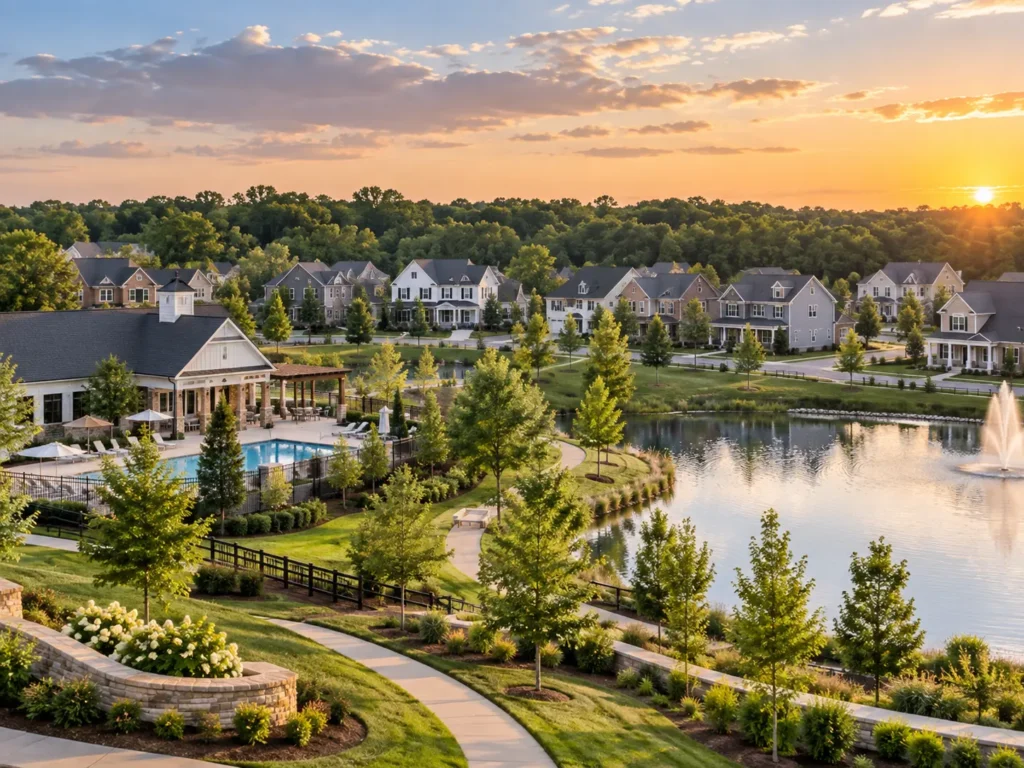
If you know you want to live somewhere north or east of Raleigh, choosing Wake Forest is only the beginning of the decision.
Buyers looking in Wake Forest often end up comparing it with North Raleigh, Youngsville, Franklinton, Knightdale, and Louisburg. They are close enough to be part of the same broader home search, but they do not offer the same lifestyle, housing, commute, or price point.
I usually encourage buyers to compare more than just the house.
Think about:
- How often you need to get into Raleigh
- Whether you want a true downtown or more suburban convenience
- How much space you want
- Whether you prefer established neighborhoods or newer construction
- How much neighborhood amenity access matters
- Whether you value a shorter commute more than a larger lot
- Which school system or assignment applies to the specific property
- What you actually want your day-to-day life to look like
Here is how Wake Forest compares with several of the communities buyers most often consider alongside it.
Quick Comparison
Recent August 2026 market data gives a useful snapshot of how these areas compare, although individual neighborhoods and property types can vary substantially.
| Area | Recent Median Sale Price* | General Feel | Good to Compare If You Want |
|---|---|---|---|
| Wake Forest | ~$465K | Established + growing suburban town | Balance of amenities, neighborhoods and Raleigh access |
| North Raleigh | ~$499K | More urban/suburban | Closer access to Raleigh employment and amenities |
| Knightdale | ~$401K | Growing suburb east of Raleigh | Raleigh access with newer development |
| Louisburg | ~$315K | Smaller-town, more spread out | More land and a quieter setting |
| Franklinton | ~$299K | Smaller but growing | New construction and more room north of Wake Forest |
| Youngsville | ~$293K | Smaller-town/suburban mix | Staying close to Wake Forest while stretching the search |
*Median sale prices reflect Redfin’s three-month data ending August 2026 and should not be treated as the expected price of a particular home. Small markets such as Youngsville can see especially large swings depending on what happens to sell during a given period.
Wake Forest: The Middle Ground
Wake Forest tends to stand out because it offers a little bit of almost everything.
You can live in an established neighborhood, buy in a newer development, find a townhome, look at luxury properties, or search for something closer to historic downtown.
At the same time, Wake Forest has enough restaurants, shopping, parks, and community activity that it does not feel like somewhere you only sleep before driving into Raleigh.
Everyday amenities include places like:
- Wake Forest Coffee Company
- Page 158 Books
- Over the Falls
- Bodega
- Unwined on White
- Gateway Commons
- E. Carroll Joyner Park
- Wake Forest Reservoir
- Downtown Wake Forest shops and restaurants
Downtown is one of Wake Forest’s biggest differentiators. The town describes it as a walkable district with locally owned retail, dining, arts, and community events. Wake Forest also manages more than 500 acres of parks, open space, natural land, and trails.
Wake Forest may appeal to you if:
- You want suburban space without feeling disconnected
- You want several neighborhood styles to choose from
- You enjoy having a real downtown nearby
- Parks, trails, restaurants, and local events matter to you
- You regularly travel toward North Raleigh but do not necessarily want to live in Raleigh itself
The tradeoff
Wake Forest has grown considerably. More development means more restaurants, stores, and housing choices, but it also means more traffic and construction in certain parts of town.
That is one reason I encourage buyers to compare individual areas of Wake Forest instead of treating the entire town as one market.
Wake Forest vs. North Raleigh
This is probably one of the most natural comparisons for buyers who want to remain close to Raleigh.
North Raleigh generally gives you closer access to the city, while Wake Forest gives you more separation from it.
Why Someone Might Choose North Raleigh
North Raleigh can make sense if your priorities include:
- A shorter trip into central Raleigh
- Access to more restaurants and shopping
- Established neighborhoods
- Mature trees and landscaping
- Easier access to Midtown and North Hills
- Proximity to major Raleigh employers and medical facilities
Depending on where you live, you may be relatively close to:
- North Hills
- Lafayette Village
- Crabtree Valley Mall
- Falls Lake
- Shelley Lake
- Durant Nature Preserve
- Restaurants and retail throughout Falls of Neuse Road and Six Forks Road
Why Someone Might Choose Wake Forest Instead
Wake Forest may be the better fit if you want:
- More of a separate town identity
- A historic downtown
- More newer-community options
- More new construction choices
- A little more distance from Raleigh
- Easier access north toward Youngsville and Franklinton
Housing cost
Recent data showed a median sale price of about $499,000 in North Raleigh, compared with roughly $465,000 in Wake Forest through August 2026.
That does not mean Wake Forest is always cheaper. Some Wake Forest communities and luxury properties can easily exceed North Raleigh pricing.
My take
If a buyer tells me, “I need to be in Raleigh frequently,” I would seriously compare both.
If the buyer says, “I want more of a community feel and I am comfortable being farther out,” Wake Forest often becomes more appealing.
Wake Forest vs. Youngsville
Youngsville is one of the first places I suggest buyers consider when they like Wake Forest but want to expand the map north.
It sits close enough that buyers can still use Wake Forest for shopping, restaurants, medical appointments, and recreation while gaining access to a somewhat smaller-town setting.
Why Someone Might Choose Youngsville
Youngsville can appeal to buyers looking for:
- More space
- Larger lots in some areas
- Newer communities
- New construction
- A quieter setting
- Proximity to Wake Forest without actually being in Wake Forest
- Potentially more house for the budget
Local places and conveniences
Youngsville has its own small-town businesses and services, but many residents also use Wake Forest for larger shopping trips, restaurants, and entertainment.
That relationship is part of its appeal: you can live in a smaller community without being far from the conveniences of Wake Forest.
Why Someone Might Choose Wake Forest Instead
Wake Forest offers more:
- Restaurants
- Retail
- Recreation
- Neighborhood variety
- Town events
- Established infrastructure
- Direct access toward North Raleigh
Housing cost
The recent Youngsville median was about $293,000, compared with approximately $465,000 in Wake Forest. However, Youngsville’s smaller number of sales can make its median fluctuate dramatically, and newer or larger properties can sell well above that figure.
My take
Do not compare Wake Forest and Youngsville by price alone.
I would ask:
- How much do you value being close to restaurants and shopping?
- How often will you drive south?
- Would you rather have more land?
- Are you comfortable with ongoing growth along the US-1 corridor?
- Does the particular Youngsville home give you enough additional value to justify the location?
Sometimes the answer is absolutely yes.
Wake Forest vs. Franklinton
Franklinton pushes the search a little farther north and can open up another set of possibilities for buyers who want space, newer development, or a lower entry price.
Why Someone Might Choose Franklinton
Buyers may find:
- New construction
- Established homes
- Larger lots
- Smaller subdivisions
- A quieter town setting
- More purchasing power in certain price ranges
Franklinton has its own small downtown and local businesses, while Wake Forest remains the larger nearby commercial center for many residents.
Why Someone Might Choose Wake Forest Instead
Wake Forest offers a much larger collection of:
- Restaurants
- Retail
- Parks
- Community programming
- Neighborhood amenities
- Medical and professional services
It is also closer to Raleigh for buyers who commute south regularly.
Housing cost
Recent market data placed Franklinton’s median sale price at about $299,000, considerably below Wake Forest’s roughly $465,000 median.
Again, those are town-wide medians rather than apples-to-apples house comparisons.
My take
Franklinton becomes more compelling when the buyer says something like:
“I care more about the house, lot, and budget than being five minutes from restaurants.”
Wake Forest becomes more compelling when convenience and town amenities carry more weight.
Wake Forest vs. Knightdale
Knightdale is a different comparison because it is east of Raleigh rather than north.
For some buyers, the decision comes down largely to where they spend their time in the Triangle.
Why Someone Might Choose Knightdale
Knightdale offers strong transportation access through I-540 and I-87/US-64, making it convenient for many parts of Raleigh and the eastern Triangle. The town also continues to experience significant residential and commercial development.
Local amenities include:
- Knightdale Station Park
- Mingo Creek Park
- Greenway connections
- Retail along Knightdale Boulevard
- Restaurants and everyday shopping
- Quick access into eastern Raleigh
Knightdale Station Park alone spans more than 70 acres and includes trails, athletic fields, playgrounds, a dog park, picnic facilities, and an amphitheater. Mingo Creek Greenway also connects into Raleigh’s larger greenway network.
Why Someone Might Choose Wake Forest Instead
Wake Forest may appeal more if you want:
- A stronger historic downtown atmosphere
- Northern Wake County access
- Proximity to Falls Lake
- More established master-planned neighborhoods
- Easier access toward Youngsville and Franklinton
Housing cost
Knightdale’s recent median sale price was approximately $401,000, versus around $465,000 in Wake Forest.
My take
I would make this decision largely around your daily geography.
If you regularly need eastern Raleigh or I-540 access, Knightdale may make more sense than people initially realize.
If your work, friends, recreation, or routines are centered around North Raleigh, Wake Forest may fit more naturally.
Wake Forest vs. Louisburg
Louisburg offers the biggest lifestyle shift on this list.
The farther you move from Wake Forest toward Louisburg, the more likely you are to encounter properties where the land, setting, and individual characteristics of the home become a major part of the buying decision.
Why Someone Might Choose Louisburg
Louisburg can appeal to buyers who want:
- Larger lots
- A smaller-town environment
- More separation from Raleigh
- Unique properties
- Access to Lake Royale-area housing
- Potentially more purchasing power
The town also has its own outdoor recreation. Riverbend Park, for example, sits along the Tar River and provides fishing access, canoe access, a playground, picnic areas, and a location close to downtown Louisburg.
Why Someone Might Choose Wake Forest Instead
Wake Forest is significantly more convenient for buyers who want:
- More restaurants and retail
- Shorter Raleigh access
- More large neighborhood developments
- More everyday services nearby
- A busier calendar of community activity
Housing cost
Recent Louisburg data showed a median sale price around $315,000, compared with about $465,000 in Wake Forest.
My take
Louisburg often works best for someone who is intentionally choosing more distance in exchange for something else they value.
That might be:
- More acreage
- A larger home
- A particular property
- Lake access
- A quieter location
If you are going to drive into Raleigh five days a week, I would think carefully about that tradeoff.
What About Schools?
This is one area where buyers need to compare the individual property, not simply the town.
Wake Forest, North Raleigh, and Knightdale are primarily associated with the Wake County Public School System, while Youngsville, Franklinton, and Louisburg extend into Franklin County Schools.
But that alone does not tell you which school a home is assigned to.
Before buying, check:
- Exact elementary school assignment
- Exact middle school assignment
- Exact high school assignment
- Current school-calendar option where applicable
- Charter and private-school options
- Transportation distance from the home
Never assume a home attends a particular school because it is located near that school or because an old real estate listing says it does.
How I Would Narrow Down the Search
If you are trying to decide between all of these communities, start with what actually affects your life.
Choose Wake Forest if you prioritize:
- A balance of amenities and residential space
- A real downtown
- Parks and greenways
- Many neighborhood choices
- Access to North Raleigh
Look harder at North Raleigh if you prioritize:
- Raleigh convenience
- Established neighborhoods
- Restaurants and shopping
- A shorter trip toward central Raleigh
Look harder at Youngsville if you prioritize:
- Staying close to Wake Forest
- More space
- Newer communities
- Expanding your budget north
Look harder at Franklinton if you prioritize:
- More purchasing power
- A smaller-town environment
- New construction and larger properties
- Less concern about Raleigh proximity
Look harder at Knightdale if you prioritize:
- I-540 and eastern Raleigh access
- Newer growth
- Parks and greenways
- A suburban environment closer to Raleigh
Look harder at Louisburg if you prioritize:
- Land
- Unique properties
- A quieter setting
- Lake-area options
- More distance from the urban core
The Best Community Depends on What You Are Trading
There is no community on this list that wins every category.
Wake Forest may offer more amenities than Youngsville, but a Youngsville buyer may get a property that better matches their space and budget goals.
North Raleigh may reduce your commute, but Wake Forest may give you the neighborhood setting you prefer.
Louisburg may put you farther from Raleigh, but that distance may be completely worthwhile if the property itself is exactly what you have been looking for.
That is why I do not like starting a search by saying, “You should live in Wake Forest.”
I would rather understand how you want to live, then compare what each area actually gives you.
I have spent more than 10 years helping buyers navigate Wake Forest and the surrounding communities, and my background evaluating properties has taught me that the right decision is rarely based on one number or one feature.
Sometimes the best way to know is to spend a day driving the areas side by side.
Get coffee in Wake Forest. Drive through Youngsville and Franklinton. Spend some time in North Raleigh. Walk through Knightdale Station Park. Look at what your budget buys in Louisburg.
Then compare not just the houses, but the life that comes with each one.
That is usually when the right location becomes much clearer.