North Raleigh offers a wide range of established neighborhoods, newer communities, and convenient access to the places many buyers use every day. I help buyers look beyond the address and compare homes, neighborhoods, pricing, and location so they can make a decision that works for the way they actually live.
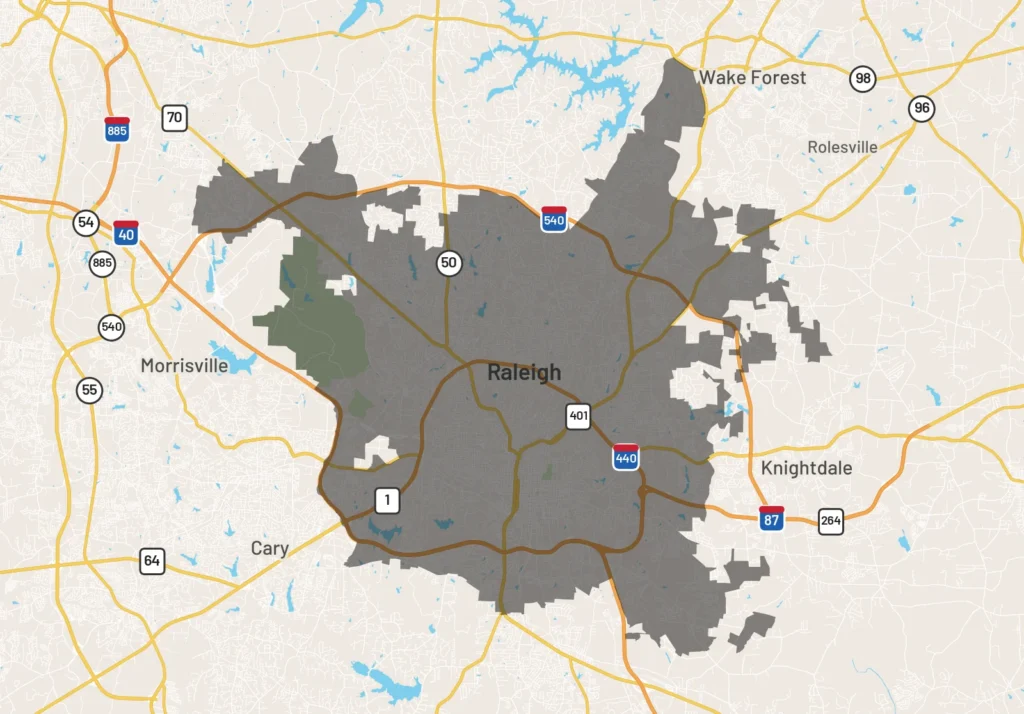
These are the latest Raleigh, NC listings, updated automatically from the MLS. Inventory ranges from condos and new townhomes in the high $200s and $300s to single-family homes in North Raleigh and historic homes inside the Beltline that can top $1 million.
One of the first things to understand about North Raleigh is that it is not one single neighborhood with a fixed boundary. People use the term to describe a broad part of Raleigh that includes many different residential areas, housing styles, price points, and everyday environments.
That is why I do not think a buyer should approach North Raleigh as if every home north of downtown offers the same experience.
You can find older established neighborhoods with mature trees, subdivisions built during different decades, townhomes, luxury properties, and newer development. Some areas put you closer to Midtown and North Hills, while others extend farther north toward I-540, Falls Lake, and the communities approaching Wake Forest.
The differences matter.
When I help someone evaluate a North Raleigh home, I want us to look at things like:
North Raleigh also offers meaningful access to outdoor recreation. Raleigh’s greenway network includes trails throughout the northern part of the city, including connections around Lake Lynn, Honeycutt Creek, and toward Falls Lake and the Neuse River Trail.
At the same time, location within North Raleigh can significantly affect your daily routine. Being closer to North Hills may appeal to someone who values dining, shopping, and a more mixed-use environment, while another buyer may prefer a quieter residential area farther north. North Hills itself has grown into a major mixed-use district with residential, dining, shopping, entertainment, and public spaces.
I bring more than 10 years of experience as a real estate agent along with more than 20 years of appraisal experience. That background makes me naturally attentive to the details that distinguish one property from another.
My goal is not simply to find you a Raleigh address. It is to help you understand whether the home, neighborhood, price, and location make sense together.

North Raleigh includes a wide variety of residential settings, amenities, and locations. These guides can help you understand the neighborhoods, everyday lifestyle, and how buying here compares with looking farther north toward Wake Forest.
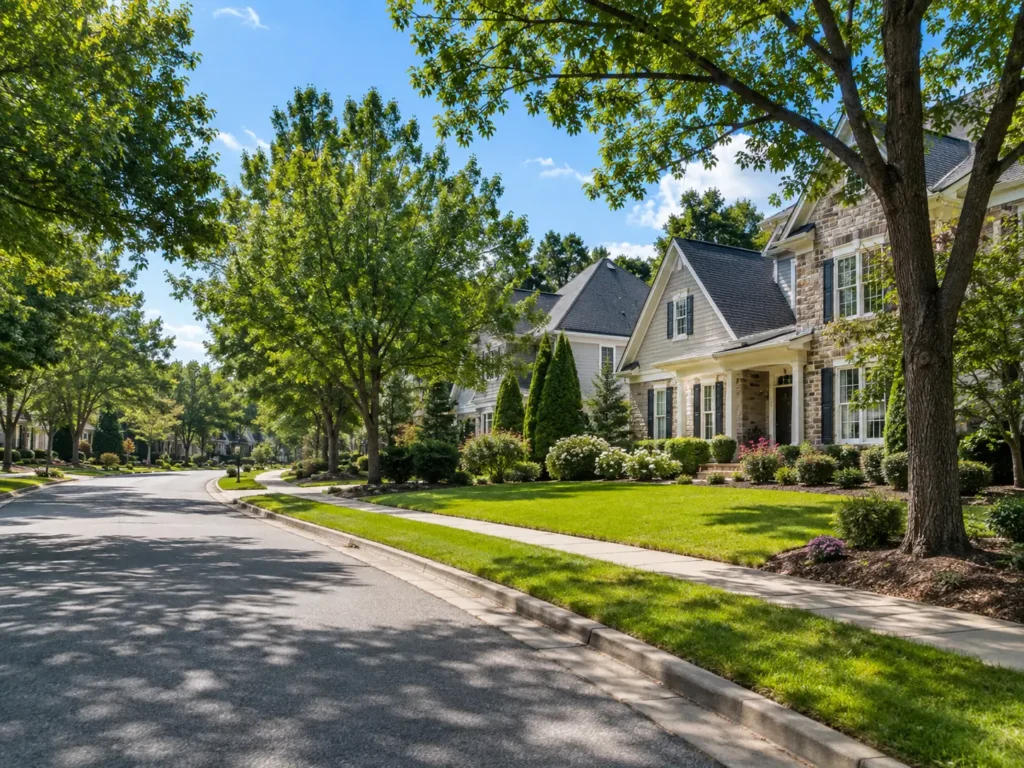
Explore established neighborhoods, newer communities, townhomes, and different parts of North Raleigh to understand how housing styles, lot sizes, amenities, age, and location can vary significantly across the area.
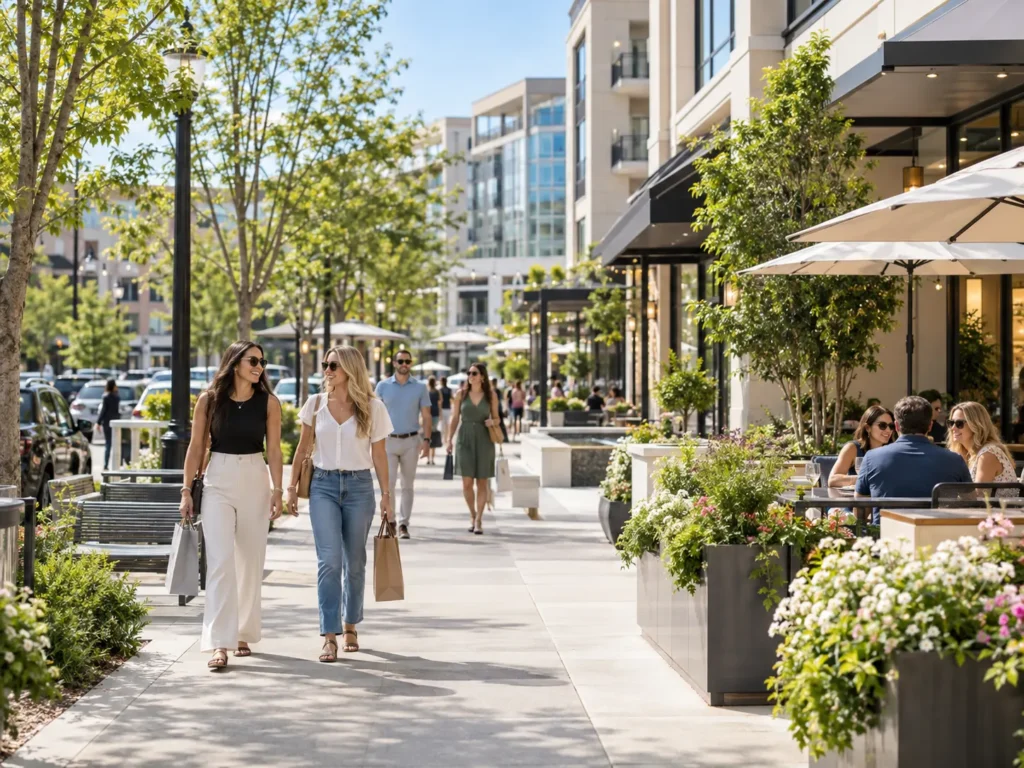
Learn more about daily life around North Raleigh, from Midtown and North Hills to parks, lakes, greenways, shopping, dining, and the practical location considerations that often shape where buyers decide to live.
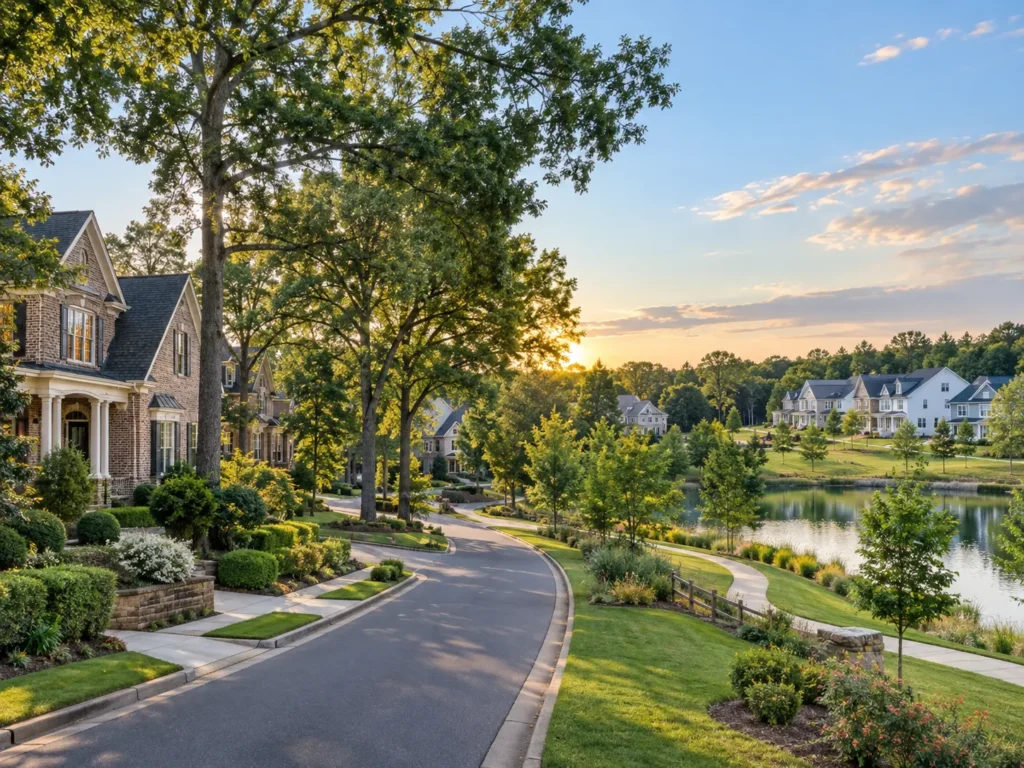
Compare North Raleigh and Wake Forest based on housing, neighborhood character, development, location, daily travel, and other tradeoffs that can help you decide whether staying in Raleigh or moving farther north fits you better.
One of North Raleigh’s biggest advantages is that buyers do not have to choose between one single type of residential environment.
You can be relatively close to the activity around Midtown and North Hills while still living in an established residential neighborhood. Move farther north and the surroundings can become noticeably different, with access toward I-540, Falls Lake, greenways, and the Wake Forest side of the market.
North Hills is a particularly good example of how this part of Raleigh continues to evolve. The district combines residences with restaurants, retail, entertainment, fitness, public gathering spaces, and pedestrian connections. Continued residential development is also adding new housing to the area.
But North Raleigh is much bigger than North Hills.
Farther north, buyers may prioritize things like:
Raleigh’s greenway system is another part of the equation. The city maintains an extensive network of trails and open spaces, with North Raleigh-area access around Lake Lynn, Honeycutt Creek, Falls Lake, and other corridors.
What I like about North Raleigh from a buyer’s perspective is the amount of comparison it allows.
You are not choosing between five nearly identical subdivisions. You may be comparing two completely different kinds of homes and neighborhoods within a relatively small geographic area.
That makes the search more interesting, but it also makes good guidance more important. Price per square foot alone cannot tell you whether an established home in one part of North Raleigh is a better purchase for you than a newer property somewhere else.
We have to look at the whole picture.

There is no single neighborhood called North Raleigh that defines the entire area. I want to know what you actually mean when you say you want to live here—closer to Midtown, near I-540, toward Falls Lake, or simply north of downtown—because that changes the search considerably.
A newer home may win on finishes, but an established North Raleigh property may offer a location, lot, landscaping, or neighborhood you cannot easily reproduce. I want buyers comparing the complete property rather than assuming newer automatically means more valuable or better suited to them.
If your search already takes you into far North Raleigh, it often makes sense to compare Wake Forest too. Sometimes Raleigh remains the obvious choice. Other times extending the search slightly north changes the available homes enough that it is worth considering both before deciding.
North Raleigh can be a useful starting point for someone relocating to the Triangle because it offers access to Raleigh without limiting you to a downtown or highly urban environment.
The challenge is that the area is broad.
A home near Midtown can create a very different day-to-day experience from one near the northern edge of Raleigh. That is why I start relocation searches by learning how you actually expect to use the area rather than simply asking which ZIP code you prefer.
Where will you work? How often will you go downtown? Will you regularly travel toward Wake Forest? Do you want restaurants and shopping nearby, or would you rather prioritize a quieter neighborhood and larger lot?
We can use those answers to narrow the search.
North Raleigh also gives buyers access to Raleigh’s large park and greenway network. The city has more than 200 parks overall, while northern-area trails and recreation include places like Lake Lynn, Honeycutt Creek, and connections toward Falls Lake and the Neuse River.
If you are moving from another state and cannot attend every showing, I can help bridge that distance as well. I have conducted video walkthroughs, returned to properties to check details, taken measurements and photos, coordinated with inspectors and builders, and helped clients work through a purchase before they were fully settled in North Carolina.
You do not need to understand Raleigh like a local on day one. That is part of what I am here to help with.

One couple I worked with knew they wanted to buy in the Raleigh area, but they were not looking for just any available house. They had very specific property features they needed and a particular part of Raleigh where they wanted to live.
Their search lasted a couple of years.
Rather than encouraging them to compromise simply to complete the transaction, we kept looking. I learned what mattered most to them, continued showing properties, and stayed involved until the right combination of home and location finally became available.
Long searches are not necessarily unsuccessful searches.
Sometimes they are what happens when a buyer knows that a major compromise will affect them every day after closing.
That experience reflects how I approach buyers in North Raleigh. There may be a lot of inventory across the broader Raleigh market, but your job is not to choose from all of it. Our job is to identify the smaller group of homes that actually fit your priorities and keep working until one of them makes sense.
— Verified Zillow review
Selling a North Raleigh home starts with understanding how buyers are likely to compare it.
That comparison may happen against another home in the same subdivision, a renovated property nearby, a newer development farther north, or even a house in Wake Forest. The relevant competition depends on the home, location, price, condition, and type of buyer most likely to consider it.
I help sellers look at those factors before deciding how to position the property.
That means reviewing relevant sales, current listings, condition, improvements, lot characteristics, neighborhood, and the features that make the home different from its competition.
My background includes more than 10 years as a real estate agent and more than 20 years of appraisal experience. I use that experience to bring additional perspective to pricing and property comparisons without losing sight of what today’s buyers are actually doing.
Established homes also raise an important preparation question: what is worth changing before you sell?
Not every older home needs a full renovation. Sometimes a smaller group of repairs, maintenance items, presentation improvements, or pricing decisions will matter considerably more.
The goal is to understand your North Raleigh home as it actually exists and build the selling strategy around its strengths.

North Raleigh is a broad local term rather than an officially defined neighborhood with one fixed boundary. Depending on who is using it, the term may include areas around Midtown/North Hills and extend north toward I-540, Falls Lake, and the Wake Forest side of Raleigh. When we start your search, I recommend defining the specific locations that work for your routine.
North Raleigh includes established single-family neighborhoods, townhomes, luxury properties, newer communities, and homes built across many different decades. That variety means buyers can often compare very different property types without leaving the general northern Raleigh area.
North Raleigh may appeal to buyers who want to remain within Raleigh and closer to certain city destinations, while Wake Forest offers its own mix of established neighborhoods, newer development, and new construction farther north. I frequently recommend comparing both if your preferred search area reaches northern Raleigh.
Many North Raleigh locations provide relatively direct access toward downtown, but travel times vary considerably depending on exactly where the home is located, your destination, route, and traffic. I prefer evaluating commute from individual properties rather than making a broad promise about the entire area.
Yes. Northern Raleigh includes access to Raleigh’s greenway system and recreational areas such as Lake Lynn, Honeycutt Creek, and routes connecting toward Falls Lake and the Neuse River. The city’s overall greenway network connects parks and destinations throughout Raleigh.
There are newer homes and ongoing residential development in parts of northern Raleigh, although established housing makes up a substantial portion of many neighborhoods. The best choice depends on whether you prioritize newer construction, location, lot, neighborhood character, maintenance, or other factors.
Yes. I have extensive experience working with relocation buyers and can assist with video walkthroughs, additional property visits, photos, measurements, inspections, builder communication, and other details when you cannot be physically present for every step.
The property-search system reports Raleigh inventory at the city level rather than using an exact “North Raleigh” MLS boundary. I can still help you narrow those listings to the parts of North Raleigh that fit your location, budget, and property preferences.